Marlow Property Guide 2026: Schools, Transport & House Prices
Marlow remains one of Buckinghamshire’s most desirable residential destinations, and for good reason.
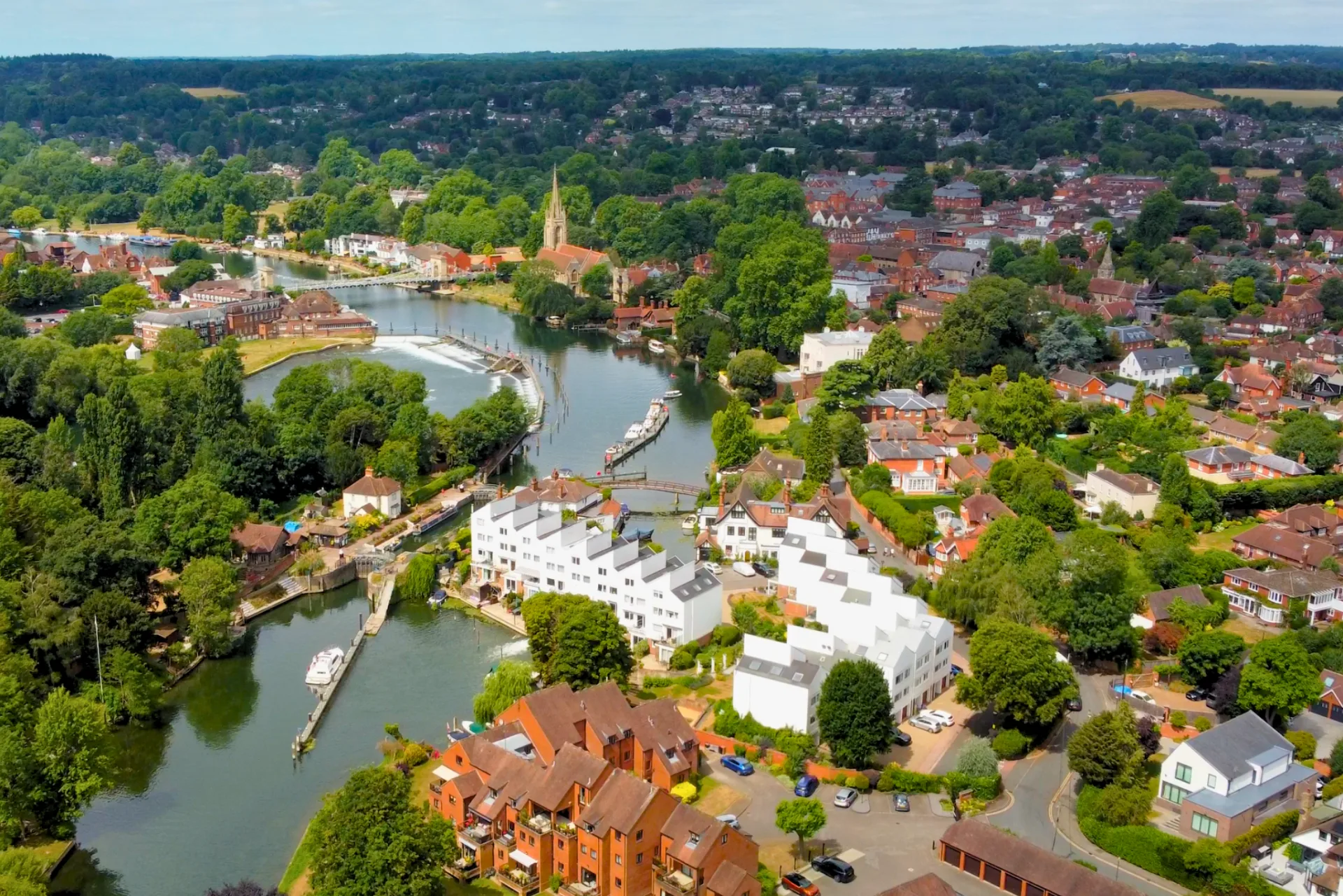
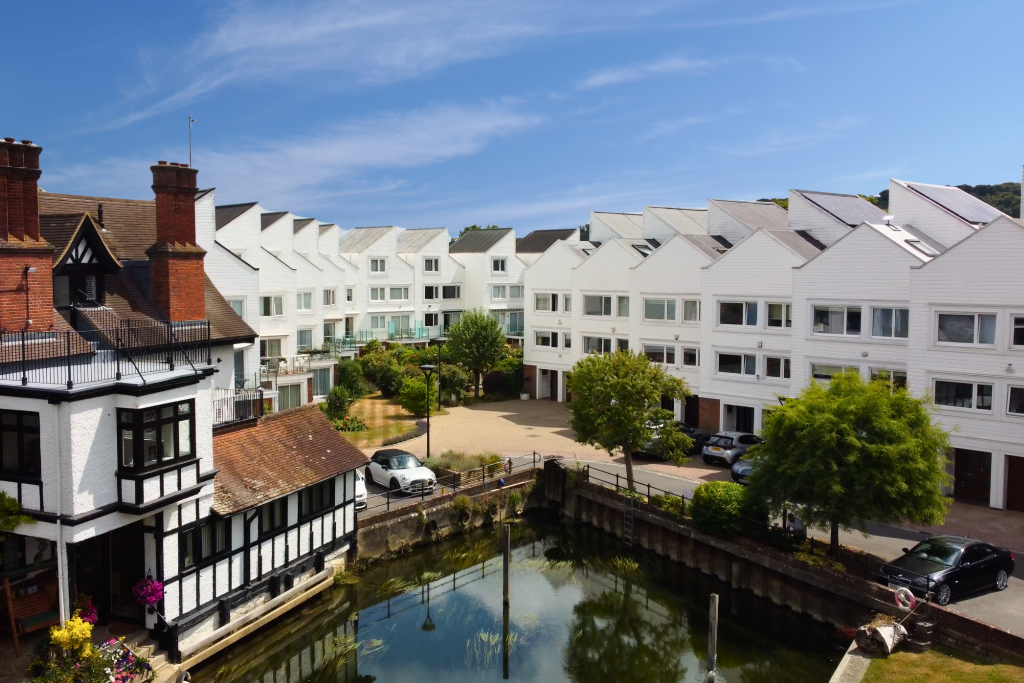
Marlow is one of Buckinghamshire’s most desirable places to live, and the reasons become clear on any Saturday morning, when the Causeway at the foot of the High Street fills with people carrying market bags and stopping mid-pavement to talk. It is a Georgian market town on the River Thames, about 33 miles west of central London, with the Chiltern Hills rising immediately to the north. In 2025 it was named one of the Sunday Times best places to live.
The appeal is a particular combination: a working high street of independent shops, good schools at every level, the river running through the middle of town, and a genuine sense of community that has survived its place in the commuter belt. This guide is a practical introduction to the town and to living here, covering the property market, schools, transport and daily life, written by people who work in Marlow every week.
Marlow Property Market Overview 2026
The Marlow property market in 2026 is steady. Across the major property portals, the average sold price over the past year sits in the high £700,000s, with Rightmove and OnTheMarket a little lower and Zoopla a little higher, the spread reflecting what each measure includes rather than any real disagreement about the town.
Most measures show prices broadly flat over the last twelve months, with only a modest softening of a few per cent. What has changed since the busier years of 2021 and 2022 is pace rather than price. Properties sit on the market a little longer, and buyers have more time to consider a purchase properly. For anyone moving to Marlow, that makes for a calmer, more considered buying environment, with reasonable choice across price points.
Average House Prices
Marlow runs, in effect, as two markets alongside each other. The larger one by volume is family housing, and recent sold data points to roughly:
Flats and apartments: the most accessible entry point, typically well below the town average, though often leasehold and worth checking the lease terms
Terraced houses: around £600,000
Semi-detached houses: around £720,000
Detached houses: averaging close to £1 million
The second market is the premium one that gives Marlow much of its reputation: Thames-frontage houses and larger period and manor properties that run well into seven figures, in some cases several times the town average. This two-tier structure is why a single headline average tells you relatively little. A realistic valuation for a specific house, on a specific street, matters far more, and it is worth getting that advice rather than relying on an asking price alone.
Market Trends & Buyer Demand
TThe pattern in Marlow is one of selective demand. Choice is reasonable across the town, decisions are less rushed than they were a few years ago, and there is scope to negotiate sensibly where a property has been priced ambitiously.
What continues to attract strong interest is the housing that makes Marlow distinctive: homes in the best school catchments, properties with river access, and houses with genuine period character. These tend to hold their value and their appeal even when the wider market is quieter. For a buyer, the practical takeaway is that location and quality within the town are what drive value, and the current market is a good opportunity to buy one of those properties on considered terms.
Education: Schools in Marlow
Education is one of the main reasons families move to Marlow, and the town is well served at both primary and secondary level. It is also a town where school choice genuinely shapes where people buy, partly because Buckinghamshire still operates a selective system, so the 11-plus is a real consideration for families with primary-age children.
Both state and independent routes are available, and proximity to the most sought-after schools tends to support property values. Catchment boundaries are worth checking carefully for any specific address, and we are always happy to talk through how a particular street sits relative to the schools.
Primary Schools
Marlow has several well-regarded primary schools serving the town, including Spinfield, Foxes Piece, Holy Trinity and St Peter’s Catholic Primary. Marlow Church of England Infant School, known locally as Sandygate, takes children from four to seven and feeds into Holy Trinity. Burford School sits just to the north in Marlow Bottom.
Places at the most popular primaries are sought after, and families often buy with a specific catchment in mind. Because catchment can affect both admission and price, it is worth confirming the position for any address you are serious about rather than relying on general assumptions about the town.
Secondary Schools & Independent Options
Marlow has two state secondary schools with quite different characters. Great Marlow School, on Bobmore Lane, is a non-selective academy of around 1,260 pupils. Sir William Borlase’s Grammar School, on West Street, is selective, entered through Buckinghamshire’s 11-plus, and has long held an Outstanding rating.
Beyond the state options, the wider area offers independent schools for families who want that route, though fees are a significant ongoing cost to weigh against the property budget rather than a one-off. The combination of a strong grammar, a solid non-selective secondary and independent choice nearby is a large part of why Marlow holds its appeal for families.
Transport & Connectivity
Marlow’s connections are good, but they are often misdescribed, so it is worth being accurate. The town works well for people who need the capital a few days a week and for anyone who relies on the motorway network. It is not a fast direct-line commuter town, so it is worth being honest with yourself about your travel pattern before buying on transport grounds.
Rail & Train Services
Marlow is not on a direct London line. The station is the terminus of a single-track branch to Maidenhead, affectionately known as the Marlow Donkey after the steam engine that once ran it, calling at Bourne End, Cookham and Furze Platt along the way. At Maidenhead you change onto the Elizabeth line or Great Western services for Paddington.
Allowing for the connection, the journey into central London is around an hour. That is workable for a few days a week, and Maidenhead also opens up Reading and the wider rail network. It is a different proposition from a town with direct fast trains, and worth factoring realistically into a daily commute.
Road Access & Local Travel
By road, Marlow is well placed. The A404 runs about a mile east of the town centre and links the M40 at Junction 4 with the M4 at Junctions 8 and 9, which makes Heathrow, Reading and the wider motorway network straightforward. The A4155 runs through the centre itself and connects to Henley-on-Thames and High Wycombe. Local bus services connect the town to neighbouring towns, though less frequently than the rail option.
One practical point that affects daily life: parking in the centre is tight, and many of the period houses in the conservation area have no off-street parking at all. It is worth checking the parking arrangement on any property you view, and weighing town-centre addresses against more peripheral ones accordingly.
Amenities & Lifestyle in Marlow
Beyond prices and school tables, Marlow’s real appeal is the texture of daily life: a working high street that has kept its independent shops, the river at the bottom of town, and a calendar with enough going on to give the year a rhythm. It is a town that suits families, professionals and downsizers alike, each for slightly different reasons.
Local Attractions & Recreation
Higginson Park is the town’s main open space, 23 riverside acres with a playground, a leisure centre, the Shelley Theatre and a clear view of the Thames. On a summer weekend there is usually cricket on the grass and boats working through Marlow Lock. The Thames Path runs straight through the centre, so you can walk upriver towards Henley or down towards Maidenhead from the middle of town.
The food scene is a genuine draw. The Hand and Flowers, Tom Kerridge’s pub, holds two Michelin stars, and his second place, The Coach, holds one, alongside the Ivy, Sindu and a high street that has held its independent character better than most. The Saturday food market on the Causeway, the Marlow Town Regatta in June and Pub in the Park in May are the town’s annual landmarks. The history sits lightly too: Mary Shelley finished Frankenstein while living on West Street, the suspension bridge by William Tierney Clark became the model for the larger Chain Bridge in Budapest, and Marlow Rowing Club, founded in 1871, produced Sir Steve Redgrave, whose statue stands in Higginson Park.
Neighborhoods to Consider
Marlow is small, with a population of around 14,000 to 15,000, so the distinctions between areas are subtle, but they are real.
Riverside and near-riverside addresses command the clear premium, and tend to attract buyers leading with lifestyle. Much of the town centre falls within a conservation area, where period houses offer a great deal of character alongside real restrictions on what you can change, so it is worth understanding the planning position before committing to one. The suburban roads away from the centre are the family heartland, with semi-detached and detached homes and easier parking, while Marlow Bottom, a mile north, tends to offer slightly more space for the money. Town-centre flats suit downsizers and professionals who want to walk to everything, though leasehold terms there deserve a careful read.
Conclusion
Is Marlow Right for You?
Marlow suits a particular kind of move: families after good schools in a real community, professionals who want the capital within reach a few days a week, and anyone drawn to life by the river. The town’s strengths, its schools, its high street, its setting on the Thames, are durable ones, and they are what continue to hold value here.
The key to buying well is good local information: catchment detail, flood risk near the river, leasehold terms, and the real differences between one street and the next. We are Stowhill Estates, a small agency run by David and Sara, and we handle every instruction personally, from the first viewing through to completion. We take on a limited number of properties at a time so that each one gets proper attention, and we are always glad to walk a few streets with someone who is thinking about a move to Marlow. There is no substitute for that.
Related Posts
Marlow Premium Property Market: In-depth Analysis and 2025 Outlook
South Bucks & Henley £1m+ Premium Property Market Update – Q1 2026